Why Internal Communication Is the Lifeline of a Strong Brand?

Is your brand story crumbling from the inside out? Without effective Internal Communication, even the most brilliant marketing strategies fail. Your employees are your first line of defense; if they don’t understand the mission, your customers never will.
This guide explores why Internal Communication is the unseen engine of brand success. We delve into how it aligns teams with Brand Purpose, transforms employees into Brand Ambassadors, and builds Brand Resilience. You will learn actionable strategies to bridge the gap between leadership and the workforce, ensuring your external promise matches your internal reality.
The Silent Killer of Brand Strategy: Poor Internal Communication
In the high-stakes world of business, leaders often obsess over external marketing. they pour millions into Digital Marketing Strategies, Influencer Marketing, and SEO. Yet, they neglect the most critical audience of all: their own people.
Internal Communication is not just about sending newsletters or hosting town halls. It is the strategic transmission of your brand’s core values, mission, and personality to the people who are responsible for delivering it every day. When this lifeline is severed, the consequences are disastrous. Confusion breeds disengagement, and disengagement kills Brand Equity.
Imagine a scenario where your external marketing promises “innovation and speed,” but your internal culture is bogged down by bureaucracy and silence. This disconnect creates a “credibility gap.” Customers sense it immediately. Your Brand Perception suffers because the people representing the brand—your employees—are not living the promise.
Defining Internal Communication in the Modern Era
What is Internal Communication today? It has evolved far beyond the company notice board. It is a sophisticated ecosystem involving Intranets, Slack channels, video updates, and Interactive Storytelling.
Its primary goal is to ensure Brand Alignment. Every employee, from the C-suite to the front line, must understand not just what the company does, but why it matters. This alignment is what turns a disjointed workforce into a unified force capable of executing Global Brand Launch Checklists and navigating Crisis Management with grace.
The Direct Link Between Internal Communication and Brand Strength
Why exactly is Internal Communication the lifeline? Because a brand is not a logo; it is a promise kept. And it is your employees who keep that promise.
1. Turning Employees into Brand Ambassadors
Internal Branding: Turning Employees into Your Most Powerful Brand Ambassadors is the ultimate goal. When communication is clear and inspiring, employees feel a sense of ownership. They don’t just work for the company; they are the company.
Consider Starbucks. Their Internal Communication focuses heavily on calling employees “partners.” They are educated deeply on the product (coffee) and the mission (human connection). As a result, they deliver a consistent Brand Experience globally. This is Brand Consistency in action.
2. Protecting Brand Safety and Resilience
In an era of cancel culture and rapid viral trends, Brand Safety in Digital Marketing is paramount. However, risks often originate internally. An uninformed employee might post something inappropriate on social media, or a customer service agent might mishandle a sensitive situation because they weren’t updated on a policy change.
Robust Internal Communication builds Building Brand Resilience. It ensures that when a Brand Crisis hits, everyone knows the protocol. They know the Brand Voice, they know the stance, and they know how to respond. This unity minimizes damage and speeds up recovery.
3. Fueling Innovation and Feedback
Communication is a two-way street. A strong Internal Communication strategy doesn’t just broadcast; it listens. It creates channels for bottom-up feedback.
Frontline employees are the ones talking to customers. They know what Consumer Brand Marketing tactics are working and which are failing. They hear the complaints about Product Marketing flaws before leadership does. By fostering a culture of open dialogue, you tap into a goldmine of insights that can drive Product Innovation and Brand Refresh strategies.
Strategic Pillars of Effective Internal Communication
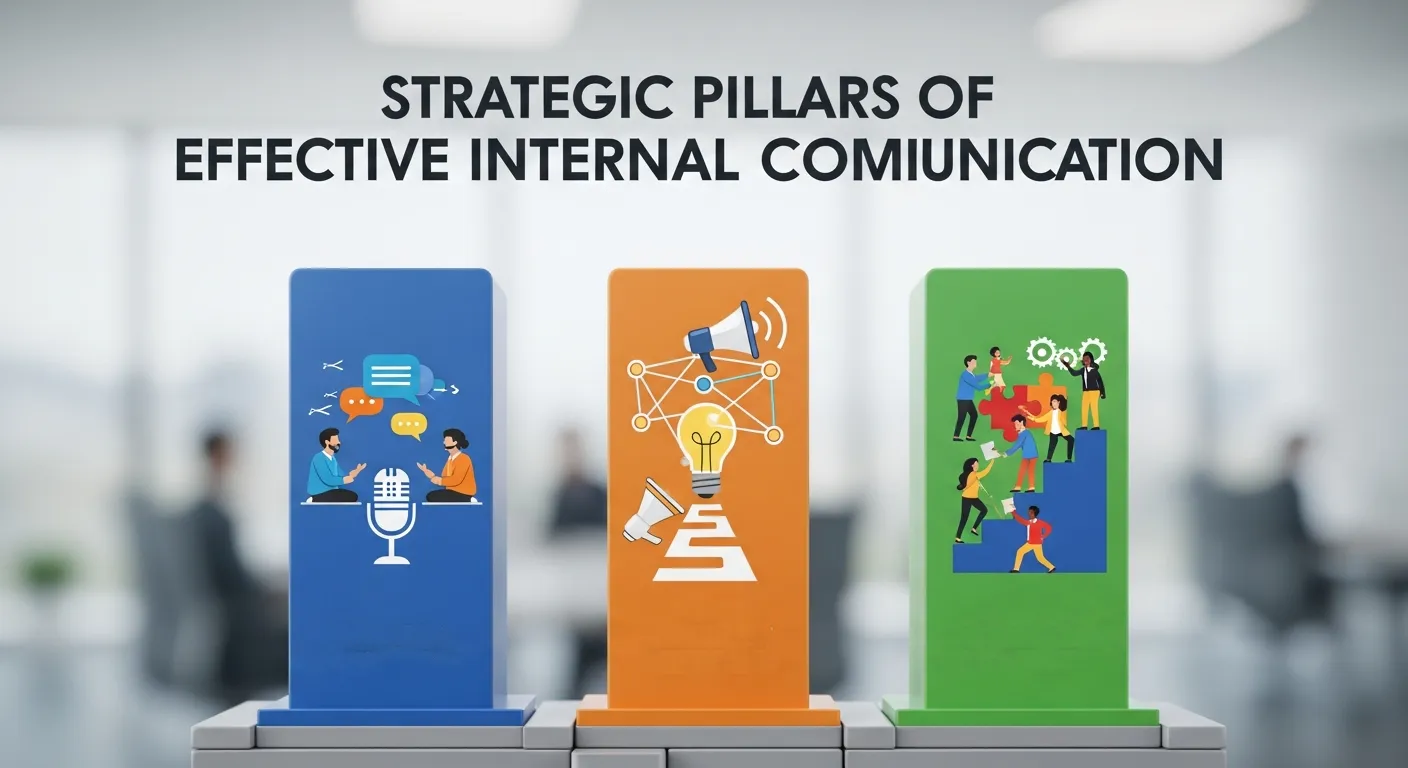
To transform Internal Communication from a support function into a strategic asset, you need to build it on solid pillars.
Pillar 1: Transparency and Trust
Transparency is the currency of trust. If employees feel leadership is hiding the Truth Behind Branded Sustainability and Environmental Harm or the real financial state of the company, they disengage.
Internal Communication must be honest. Even bad news, when communicated with empathy and clarity, can build trust. This is crucial for Brand Trust. When employees trust the organization, they stay longer (retention) and work harder (productivity).
Pillar 2: Consistency in Brand Voice
Your Brand Voice shouldn’t change when you walk through the office doors. If your external brand is fun, quirky, and youthful (think Meme Marketing 2.0), but your internal emails are stiff, formal, and bureaucratic, you create cognitive dissonance.
What Is Brand Voice in Marketing? It is the personality of your brand. Your internal memos, HR policies, and leadership speeches should reflect this personality. Brand Personality In Marketing must be consistent internally and externally to feel authentic.
Pillar 3: Accessibility and inclusivity
Inclusive Brand Strategies must start at home. Internal Communication must be accessible to everyone—remote workers, deskless frontline staff, and international teams requiring Global Brand Localization.
If your strategy relies solely on email, you miss the factory worker who doesn’t have a corporate address. If it relies on HQ town halls, you alienate the remote developer in another time zone. Using mobile apps and Omnichannel Personalization for internal comms ensures no one is left behind.
How Internal Communication Drives Marketing Success
There is a symbiotic relationship between Internal Communication and external marketing results.
|
Internal Action |
External Result |
|---|---|
|
Educating on Brand Values |
Authentic Green Marketing & Sustainability claims. |
|
Sharing Marketing Wins |
Increased employee advocacy on social media. |
|
Clarifying Brand Voice |
Consistent Content Marketing across all channels. |
|
Crisis Protocols |
Faster, unified response to PR issues. |
|
Highlighting Success Stories |
Better Employer Branding & Talent Acquisition. |
Aligning Sales and Marketing
One of the oldest rivalries in business is Sales vs. Marketing. Internal Communication bridges this gap. By regularly sharing Digital Marketing Success Stories and Lead Generation data with the sales team, and feeding sales feedback back to marketing, you create Integrated Marketing.
This alignment is crucial for Account-Based Marketing (ABM) and B2B Brand Differentiation. When both teams speak the same language and pursue the same goals, revenue grows.
Amplifying Content Reach
Your employees are a distribution channel. If you have 500 employees, you have 500 potential micro-influencers. But they will only share your content if they know about it and feel proud of it.
Using Internal Communication to alert the team about a new blog post, a viral video, or a major press release encourages them to share it on their LinkedIn or X (Twitter). This organic reach is often more effective than paid ads because people trust people. This is the essence of Employee Advocacy.
Navigating the Challenges of Internal Communication

It’s not all smooth sailing. There are significant hurdles to overcoming the “noise.”
The Noise Problem
Employees are bombarded with emails, Slack notifications, and meeting invites. Your Internal Communication competes for attention in a distracted world.
Solution: Use Segmented Communication. Don’t send every email to “All Staff.” Tailor messages to specific departments or regions. Use Visual Storytelling and Video Content to cut through the text-heavy clutter.
The Remote Work Disconnect
With the rise of hybrid work, the “water cooler” moment is dead. Building culture remotely is hard.
Solution: Invest in Virtual Town Halls and digital social spaces. Use Gamification in Marketing principles internally—create contests, leaderboards, and recognition badges to keep engagement high. Mastering Metaverse Branding internally (virtual offices) is an emerging trend to solve this proximity bias.
Measuring Impact
How do you calculate the ROI of a newsletter? It’s difficult.
Solution: Move beyond “open rates.” Measure Employee Engagement Scores (eNPS), turnover rates, and adoption of new initiatives. Use Social Listening as a Brand Strategy Tool internally—monitor sentiment on internal channels to gauge the mood.
The Future of Internal Communication: 2026 and Beyond

As we look ahead, Internal Communication is becoming more technological and more human simultaneously.
AI and Personalization
AI-Powered Brand Analysis isn’t just for customers. AI tools can now analyze internal communication patterns to predict burnout or disengagement. They can also personalize internal news feeds, ensuring an engineer sees technical updates while a salesperson sees lead data. This is Hyper-Personalized Branding applied to the workforce.
The Rise of Sensory Branding Internally
Sensory Branding—using sound, touch, and smell—is entering the workplace. Companies are curating office playlists (The Power of Sonic Branding) and designing physical spaces that reinforce the Brand Aesthetics. For remote workers, this might mean branded “welcome kits” that engage the senses, fostering a physical connection to the digital brand.
Neuro-Communication
Understanding Neuromarketing Techniques helps internal communicators craft messages that stick. Knowing how the brain processes fear, reward, and social connection allows leaders to communicate change (like a restructuring) in a way that minimizes anxiety and maximizes acceptance.
Conclusion
Internal Communication is not a “nice to have”; it is the central nervous system of your organization. It dictates how fast you can move, how well you can adapt, and how strongly you can fight.
If your Internal Communication is weak, your brand is fragile. It might look good on the outside for a while, but eventually, the cracks in the foundation will show. Disengaged employees lead to poor customer service, which leads to negative reviews, which leads to brand erosion.
Conversely, when Internal Communication is vibrant, transparent, and strategic, it becomes your greatest competitive advantage. It builds a tribe of believers who will defend the brand, innovate on its behalf, and drive it toward a prosperous future. In the battle for market share, your external marketing is the air force, but your Internal Communication is the ground troops. You need both to win the war.
FAQs
1. What is the primary role of Internal Communication in branding?
The primary role of Internal Communication is to align the workforce with the brand’s mission, values, and promise. It ensures that every employee understands the brand story and knows their specific role in delivering it to the customer.
2. How does Internal Communication affect external customer experience?
There is a direct link. Informed and engaged employees are happier and more knowledgeable. This translates to better customer service, faster problem resolution, and a more consistent Brand Experience. If the employee doesn’t know the latest promotion or policy (due to poor comms), the customer gets frustrated.
3. What are the best channels for Internal Communication?
The “best” channel depends on your workforce. For office workers, Slack, Microsoft Teams, and Intranets are standard. For frontline or deskless workers, mobile apps and SMS are often better. Video updates from leadership are highly effective for all groups as they humanize the message.
4. How can we measure the success of Internal Communication?
Metrics include Employee Net Promoter Score (eNPS), intranet engagement rates (views, comments), email open rates, and employee turnover rates. Qualitative feedback via surveys and focus groups is also vital to understand sentiment.
5. What is the difference between Internal Communication and HR?
HR focuses on the employee lifecycle (hiring, payroll, benefits, performance). Internal Communication focuses on the flow of information, culture building, and brand alignment. While they often collaborate, Internal Comms is more closely linked to Marketing and Strategy.
6. Can Internal Communication help during a crisis?
Absolutely. During a Brand Crisis, rumors spread fast. Effective Internal Communication controls the narrative, provides facts, and gives employees clear instructions on how to handle external inquiries. It calms the workforce and presents a united front.
7. How does Internal Communication support Diversity and Inclusion?
It gives a platform to diverse voices. By sharing stories from different employee resource groups (ERGs) and ensuring all communication is accessible and inclusive in language, it reinforces the company’s commitment to Inclusive Brand Strategies.
8. Why is “Brand Voice” important internally?
Using a consistent Brand Voice internally helps employees “learn” the brand’s personality. If they read fun, empathetic internal emails, they are more likely to use that same tone when speaking to customers. It creates Brand Consistency.
9. What happens if Internal Communication is neglected?
Neglect leads to silos, rumors, and disengagement. Employees feel “out of the loop” and undervalued. This results in lower productivity, higher turnover, and a diluted Brand Identity because everyone is singing from a different song sheet.
10. How do I start an Internal Communication strategy?
Start with an audit. Survey employees to find out what they know, how they currently get information, and what they feel is missing. Define your Key Messages and Brand Values. Then, choose the right channels and create a content calendar just like you would for external marketing.